A Late-Summer Shelf for the Harvest at Hand
Plan a late-summer shelf by sorting ripe produce, choosing what to preserve, and leaving pantry space open for the next harvest to arrive.
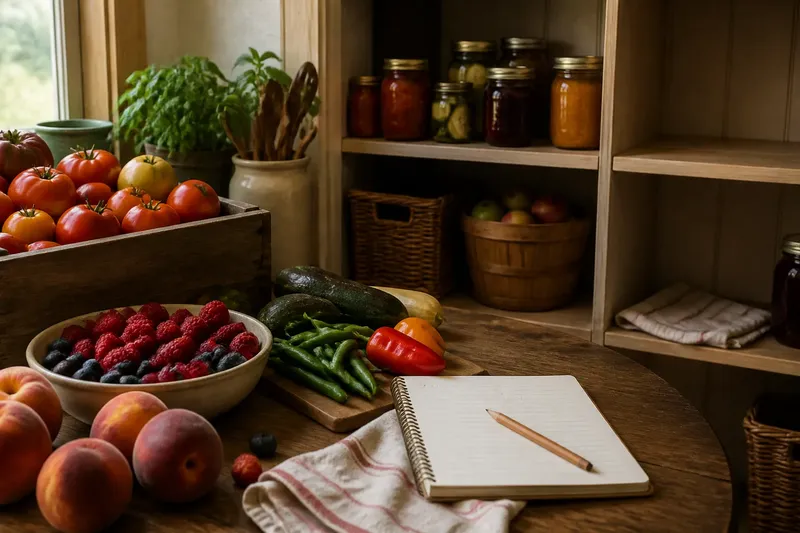
A late-summer shelf is easiest to plan when you start with the produce already on your counter, not an ambitious list of jars to fill. For a late-summer shelf, decide what needs attention now, what can wait, and which empty spaces should stay empty for produce still coming in.
This is a working plan, not a promise to preserve every glut. Keep a pencil, a scrap of paper and a clean tray nearby; you can revise the plan as the weather, garden or market haul changes. For preservation methods and storage conditions, follow the food’s reliable recipe, its label and local food-safety guidance.
What has arrived, and what is ready now?
Gather the produce you have bought, picked or been given, then group it by kind. Keep fruit separate from vegetables, and set aside anything bruised, split or already very ripe so it does not disappear beneath firmer pieces.
Look at each group rather than treating the whole harvest as one job. A bowl of ripe tomatoes may need attention today, while firm plums or peppers could be used over the next few meals. Note what is actually ready; do not count produce that is still on the vine or only expected from a neighbour.
For each group, write down three things: how much is on hand in plain terms, what condition it is in, and when you expect to use it. “A bowl of soft tomatoes” is more useful than a vague note such as “tomatoes”. This record gives you a practical starting point without turning the kitchen into a stock-control exercise.
What should you use soon?
Choose the most fragile produce first. Very ripe berries, tender leaves, cracked tomatoes and soft stone fruit are often better candidates for a meal, a quick sauce or a simple preserve than for waiting on a shelf. Remove damaged pieces from sound ones, and deal with them promptly according to their condition.
Next, look at what your household already eats. If a pile of courgettes is growing, plan a dish that uses them while they are in good shape; if nobody reaches for courgette relish, preserving it merely shifts the problem to a jar. A useful late-summer shelf starts with food you are likely to want later.
Make a short “use soon” note and place it where meal decisions happen, such as on the fridge door or beside your shopping list. Keep the note concrete: “tomatoes for supper” or “peaches for breakfast” gives you a prompt you can act on, rather than another broad reminder to eat seasonal food.
What is worth setting aside?
Now consider what you would genuinely welcome after the harvest has passed. Think in terms of familiar uses: tomatoes for soup, berries for porridge, or sliced peppers for a future meal. A planned use helps you choose a suitable preservation method and portion size before you begin.
Match the quantity to the space and time you have. If you have room for only a few jars, choose the produce that is both abundant and useful to you. If you have a freezer with space, freezing may suit some fruits or vegetables; if not, consider cooking a smaller amount or sharing the surplus. Use a tested recipe for preserving methods that require one, rather than improvising processing times or ingredients.
Imagine you have a crate of tomatoes, a small bowl of ripe berries and only a little clear cupboard space. You could plan a batch of tomato sauce for a familiar meal, use the berries with breakfast, and leave the cupboard open rather than trying to preserve both crops. The observable result is a specific job for the tomatoes, a near-term use for the berries and room for the next useful harvest.
Before you commit, ask whether the preserved food will fit the way you cook. A large jar may be awkward if you usually cook for one; several smaller portions may be more useful, provided the recipe and storage method allow them. Leave time for cooling, labelling and putting food away safely, not just the active cooking.
How much pantry space should stay open?
Resist filling every shelf simply because space is available. Late summer brings changing produce: an early surplus can be followed by apples, pears, beans or another crop you would rather keep. An open patch is not wasted storage; it is room to respond.
Look at the pantry, freezer or other suitable storage area before deciding on a batch. Clear out food that is no longer in good condition, group similar items, and leave a visible gap where new provisions can go. Keep foods in places appropriate to their method and conditions, not wherever a shelf happens to be empty.
Use a simple capacity note on your planning paper: “space for a few jars”, “freezer drawer nearly full” or “no room for another box”. The point is to make space a decision made before cooking, rather than discovering afterwards that the harvest has nowhere suitable to go.
How do you turn the plan into a workable order?
- Sort the arrival. Group produce by type and condition, keeping damaged or very ripe items visible.
- Choose immediate uses. Set aside the most delicate food for meals or prompt preparation.
- Pick one preservation priority. Select the food with a clear later use and a suitable method.
- Check capacity. Make sure the intended jars, freezer space or other storage are available before starting.
- Leave a gap. Keep some suitable space open for the next arrival instead of planning to fill everything.
- Review after the next harvest. Update the note when new produce arrives, and change the order if its condition or amount differs from what you expected.
This sequence keeps the decisions in a sensible order: condition first, use next, preservation after that, and storage capacity before the work begins. It also gives you permission to make a smaller batch or leave a crop unpreserved when that is the better fit.
Which late-summer shelf questions come up often?
Should I preserve every surplus crop?
No. Preserve what you have a real use for and can store appropriately; cook, share or use the rest promptly if that suits your household better. A harvest does not become more valuable just because it has been put into a jar.
What if several crops are ready at once?
Prioritise the most delicate or damaged produce, then choose the crop with the clearest later use for preservation. Put the rest into a near-term meal plan or reassess once the urgent food is dealt with.
How can I plan when the next harvest is uncertain?
Plan only with what has arrived, and leave room for likely arrivals rather than assigning every shelf in advance. A brief note about what is still growing can help you stay alert without treating an uncertain crop as food already in hand.
Can a meal count as preserving the harvest?
A meal is a sound way to use seasonal produce, but it is not the same as storing food for later. Keep the distinction clear in your plan: meals solve an immediate surplus, while preservation sets food aside under a suitable method.
When should you revise the shelf plan?
Revisit your note whenever a new bag, basket or garden picking arrives, or when you notice that stored food is not being used as expected. Cross out a planned batch if the crop is smaller than hoped, and make a fresh choice if another ingredient has become more urgent.
Keep the plan modest enough to change. A late-summer shelf should reflect the harvest at hand, the food your household will actually use and the space you can safely spare. When you make the next late-summer shelf plan, leave one useful gap: it keeps your choices open for the crop that has not arrived yet.