The Pantry Label That Says Less Than You Think
A pantry label with a plain name and date makes stored food easier to recognise, sort and use, without turning a jar into a record-keeping project.
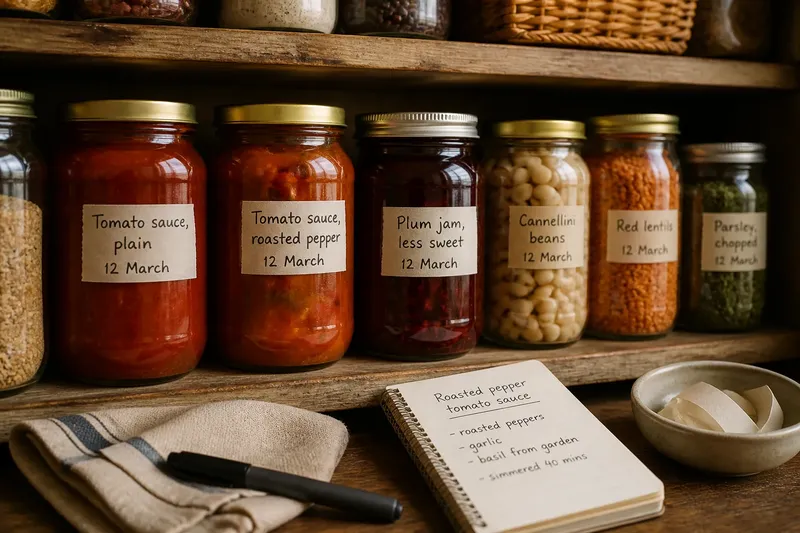
A pantry label does not need to tell the whole story. For most jars and containers, a plain food name and the date you stored it are enough to make the contents recognisable and easier to bring into everyday cooking. The useful question is not what every label could say, but which details will help you choose and use a provision later.
What can a pantry label actually tell you?
A label is a note for your future self, written at the moment when the contents are easiest to identify. It can name the food, distinguish one version from another, and record when you put it away. It cannot, by itself, tell you how the food was prepared, whether it was stored correctly, or whether it remains suitable to eat.
That distinction matters because a neat label can look more authoritative than it is. Treat it as an aid to recognition, not a certificate of safety or a substitute for sound storage practice. If a container’s condition or contents raise concerns, the writing on the outside cannot settle them.
For ordinary household use, start with the words you will search for while planning a meal: “pear chutney”, “red lentil soup” or “chopped parsley”. A name such as “garden mix” may make sense when you fill the container, then leave you guessing when you reach for it weeks later.
Which details belong on the label?
Think of the label as having a small core and optional additions. The core is a clear name and a date. Add another detail only when it helps answer a question you are likely to have before using the food.
- Name: Write the food in familiar terms. Add a defining ingredient or form if the short name could refer to several things, such as “tomato and basil sauce” rather than “sauce”.
- Date stored: Write the date the container was filled or placed into storage. A consistent format, such as “12 March”, is easier to read than shorthand that could be mistaken for a different month-and-day order.
- Useful distinction: Add a variety, preparation style or batch note if it changes how you will use the contents. “Plum jam, less sweet” may be more informative than a long ingredient account.
- Optional use note: A brief prompt such as “for soup” can help if the food has a particular intended use. Leave it off if it simply repeats what the name already tells you.
Labels work best when these details are legible at a glance. A small piece of masking tape and a waterproof pen can be enough for many containers; a removable freezer label may suit surfaces that are colder or damp. Keep the writing to the part of the container you can see when it is stored, rather than hiding it behind a handle or another jar.
Should you use a short label or a detailed one?
There are three workable approaches: a minimal name-and-date label, a selective label with one distinguishing detail, or a fuller record kept separately. They serve different habits, and none needs to become a rule for every item in the cupboard.
When is a name and date enough?
Choose the short version for familiar foods that are easy to identify and use in similar ways, such as dried beans transferred to a container or a straightforward batch of fruit preserve. It keeps labelling quick and makes the essential information prominent. This suits a household that wants a clear shelf without maintaining a separate inventory.
When should you add a distinguishing detail?
Add a brief qualifier when two containers could otherwise be confused or when the difference affects a meal. “Apple sauce, spiced” and “apple sauce, plain” are easier to tell apart than two labels that say only “apple sauce”. This approach suits cooks who keep variations of the same food but do not want to record every ingredient.
When does a separate record help?
Keep a notebook or simple phone note when a batch has details worth retaining, such as where a particular ingredient came from or how you adapted a recipe. A fuller record can preserve those details without crowding the container or making each label laborious. This suits keen preserving households, especially when several people share the pantry.
How do you choose the right level of detail?
Choose the shortest label that will prevent a likely mix-up. Ask yourself what you might need to know when you are holding the container: what is it, when did it go into storage, and is there a meaningful difference between it and the next one? If the answer needs only a name and date, stop there.
Say you have two jars of tomato sauce, one plain and one with roasted peppers. You could label them “Tomato sauce, plain — 12 March” and “Tomato sauce, roasted pepper — 12 March”; the extra words distinguish the jars, while a full recipe transcription would not help you pick one for dinner. If you later want to remember how you made the pepper version, add that information to a separate recipe note.
Keep your date convention steady. Writing the month as a word avoids ambiguity, while a year can be useful when you keep provisions across different seasons. If you prefer a compact numeric format, use one you and the other people in your household read the same way.
Make the choice with the people who will use the food in mind. A label that seems obvious to the person who filled the jar may not be clear to someone else. Spell out local shorthand, unfamiliar variety names or abbreviations that only one cook understands.
What does a pantry label leave unanswered?
A date is a record of when you stored something, not a promise about how long it will keep. A food name does not establish which preparation method was used, and a tidy, intact-looking label does not confirm the condition of the contents. Rely on appropriate handling and storage, and follow the product or preserving instructions that apply to the food.
Some details belong on the original packaging rather than a household shorthand label. If you transfer a packaged food, retain relevant information such as its ingredient or allergen details where someone who needs them can check it. For home-preserved foods, follow the applicable recipe, equipment instructions and local food-safety guidance; a brief jar label should not be asked to replace them.
Likewise, do not assume that “opened”, “sealed” or “homemade” says enough on its own. Those words can mean different things in different kitchens. If an operational note matters to safe handling, use the instructions for that food rather than inventing a rule from the label.
How can you make labels easy to read and update?
Match the writing method to the container and its storage place. Paper tape is easy to replace on a dry jar, while a label designed for chilled or damp surfaces may stay more readable where ordinary tape lifts. If the container will be reused, choose a removable label or leave a clear space for one.
Write on the container before it joins a crowded shelf. Put the label where you can read it without lifting or turning the jar, and use a pen that does not smudge when handled. On a small lid, keep the wording short; a larger side label is often easier to scan when containers are stacked.
When you reuse a jar, remove or cover the old label before filling it again. Two dates or overlapping names invite a guess, which defeats the purpose of labelling. If tape leaves residue, clean the glass before adding the new label so the writing has a firm, uncluttered surface.
Which pantry-label questions come up most?
Should I write the date made or the date stored?
Use the date that will make sense for your own routine, and label it consistently. For a prepared food, the date made is usually easy to record as you fill the container; for a purchased item moved from its packet, the date stored can mark when you transferred it. If those dates differ and the distinction matters to you, name the date plainly rather than relying on an unexplained number.
Do I need to list every ingredient?
Not on every pantry label. A short ingredient or flavour note can distinguish similar foods, while a complete ingredient record is better kept with the recipe or original product information when it needs to remain available. Include allergen information where it is relevant to someone who may eat the food.
Can I use labels on tins or plastic containers?
Yes, if the label adheres to that surface and remains readable in its storage conditions. Test the fit with a removable note before making a large set, especially on curved, cold or textured containers. Keep any manufacturer information you still need visible or recorded elsewhere.
What should I do if a label comes off?
Do not guess from a faded mark or an uncertain memory. If you can identify the food and its storage date reliably from another record, replace the label; if you cannot establish what it is or how it was handled, do not treat a newly written guess as dependable information.
How do you keep the habit simple?
Keep tape and a pen close to the place where you fill or put away containers. Write the name and date before setting the food aside, then add a qualifier only when it prevents a real ambiguity. This small routine is more useful than a detailed labelling system that takes so much effort that jars are left unmarked.
Use pantry labels to make stored provisions easier to recognise, not to make them carry a whole history. A clear name and date form a practical starting point; an extra word or separate note can capture what matters for a particular batch. The right label is the one that answers your next useful question without pretending to answer the ones it cannot.