Glass Jars or Crocks: Two Ways to Keep a Pantry
Glass jars or crocks suit different pantry habits: compare visibility, access, space and cleaning to choose containers you’ll use comfortably.
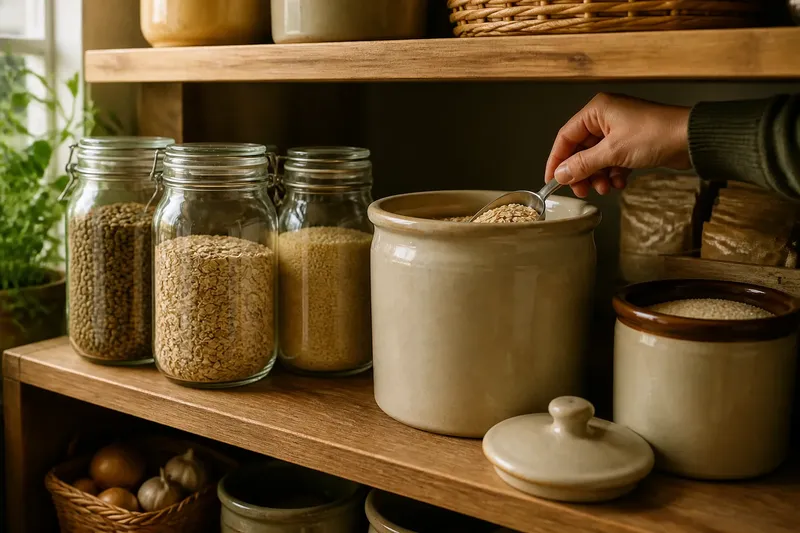
Glass jars or crocks: which suits your pantry better? If you want to see what is inside at a glance, clear glass has the advantage; if you prefer a shaded, visually quieter shelf, an opaque crock may fit better. The right choice also depends on how often you reach for the contents, how much space the container occupies and how you like to clean it.
Which container suits the way you use the pantry?
Start with the food and the moment you reach for it, rather than with a matching set of containers. A jar works well for ingredients you identify by sight and use in measured amounts. A crock is handy for pantry staples you scoop from regularly and would rather keep out of view.
Think about the shelf as a working surface. If several people share the kitchen, a clear jar can make contents obvious to someone who did not put them away. In a pantry where visual calm matters more, a crock can keep a collection of mismatched packets and colours from dominating the shelf.
- Choose glass jars for ingredients you need to identify quickly, portions you want to monitor, or contents you transfer with a spoon.
- Choose a crock for frequently used staples that you can recognise from a label or a familiar shelf position.
- Use both when the pantry has distinct needs: jars for visible, occasional-use ingredients and crocks for familiar daily staples.
Say you keep rolled oats for breakfast and dried lentils for occasional cooking. You might place the oats in a crock near the breakfast shelf, where the opaque body keeps the scene uncluttered and the familiar location makes them easy to find. A clear jar for the lentils lets you see what remains before you plan a meal; the result is a shelf organised around your routines, not a rule that every ingredient needs the same container.
When does visibility matter more than a quiet shelf?
Glass makes the contents and their remaining amount visible without opening the container. That helps when two pale ingredients look alike in their packets, or when you want a quick reminder to add an item to a shopping list. The view is useful only if you can identify the contents: a jar of similar-looking grains may still need a clear label.
An opaque crock hides contents, including small differences in colour and texture. That can make a shelf feel less busy, especially when containers sit in an open cupboard or on a worktop. The trade-off is that you must rely on a label, a distinctive lid or a consistent place in the pantry rather than a glance through the side.
Consider the shelf’s light as well as its appearance. If a container sits beside a sunny window, choose its position with the food’s storage needs in mind; the container itself does not decide whether that spot is suitable. Glass can reveal changes you might want to notice, while a crock offers no view until you open it.
How do shape and opening affect everyday handling?
Glass jars come in many shapes, from narrow-necked bottles to wide-mouth jars. A wide opening makes it easier to reach in with a measuring cup or spoon and to remove the last contents. A narrow opening may pour neatly, but it can be awkward for a scoop or for washing by hand.
Crocks often have broad openings and a stable base, making them comfortable to dip into. Their rounded shoulders or thick rims can take up more shelf room than their opening suggests, though, and a deep crock can make the last portion difficult to reach. Check that the tool you normally use fits the opening before giving the container a permanent home.
Lids change the experience of both forms. A screw-top jar needs a lid that is easy to grip and return; a crock may have a loose-fitting cover that lifts off in one motion. If you tend to cook with one hand occupied, imagine opening and closing the container while holding a spoon, rather than judging it only by how it looks on the shelf.
What changes when the shelf is shallow or crowded?
Compare the container’s full footprint, not just its body. A handle, lid knob or flared rim may stop it fitting beneath a shelf or beside another vessel. Jars are often easy to line up in a row, while broad crocks may need more space around them to lift them out without knocking a neighbour.
Weight matters when a container is full. A small glass jar is easy to move, but a large one can become awkward to lift from a high shelf. A crock may be comfortable to scoop from when it stays put, yet inconvenient if you need to carry it across the kitchen. Keep heavy containers where you can lift them securely, and choose a manageable size rather than treating extra capacity as an automatic advantage.
Think about refilling, too. A wide-mouth jar can be convenient when you pour in a new packet, while a crock with a broad opening may be easier to fill from a bowl. If you buy ingredients in different quantities, select a container that leaves a little room for handling rather than forcing every purchase into a brim-full vessel.
Which pantry container is easier to clean and maintain?
Glass is non-porous and usually straightforward to wash, but its shape can complicate the job. A narrow neck may need a bottle brush, and a heavy jar is easier to handle in a clear sink than at the edge of a crowded one. Check that the mouth is wide enough for your hand or brush to reach the inside comfortably.
Crocks can be simple to wipe when their interior is smooth and their opening is broad. Their weight and thick rims can make washing less convenient, and decorative surfaces or textured finishes may take more care. A crock that is awkward to clean is likely to be used less often, however appealing it looks on the shelf.
In either case, inspect the lid separately. Loose crumbs collect around threads, seals and the underside of a cover. Choose a design whose lid and body you can clean and dry without special effort; a container that returns neatly to service is more useful than one that needs a dedicated place in the washing-up queue.
What should you check before choosing glass jars or crocks?
Is clear glass always the more practical choice?
No. It helps you see and identify contents, but that advantage can be unhelpful if you prefer a visually calm shelf or the container’s location is exposed to unsuitable light. Choose glass when the view helps your routine and the placement suits the food.
Are crocks difficult to label?
They can be labelled with a removable sticker, a tag or a small card placed beside them. Pick a method that stays legible and can be changed when the contents or shelf arrangement changes.
Should every pantry ingredient have a matching container?
No. Matching containers can make a shelf look orderly, but the best shapes may differ for pouring, scooping and lifting. A mixed collection is sensible if each container has a clear job and fits the space you have.
Can I use any jar or crock for any pantry food?
Not automatically: the container’s material, lid and condition must suit the food and its storage needs. Follow the food packaging and manufacturer’s care instructions, and check local guidance where it applies.
How can you make a mixed shelf feel deliberate?
Group containers by use rather than insisting that they match. Keep the items you reach for together, leave enough room to lift each vessel, and put the most frequently used containers where they are easy to reach. A jar and a crock can sit comfortably side by side when their shapes and functions make sense.
Give each container a simple identity. A legible label helps when contents are hidden or look alike; for a clear jar, it can still distinguish ingredients that are hard to tell apart. If you prefer not to label the front, use a tag on the lid or reserve a consistent shelf position for a familiar staple.
When choosing glass jars or crocks, picture the ordinary task rather than the idealised pantry: opening the lid, taking a scoop, putting the container back and cleaning it later. Pick the vessel that makes those movements natural in your kitchen, and let the rest of the shelf follow from that decision.