Before the Icebox: How Households Kept Provisions
Before the icebox, households kept provisions through daily buying, cool corners and careful meal timing; see how refrigeration changed that routine.
Before the icebox, keeping provisions was less a matter of setting aside a week’s food than of arranging household life around what could stay fresh. The history of the icebox shows how a block of delivered ice gradually changed shopping, cooking and the meaning of a well-stocked kitchen.
Rather than replacing older habits all at once, the icebox became a new household tool layered over familiar routines. These five changes explain why its arrival mattered beyond the cold compartment itself.
1. How did households keep food close at hand?
Before domestic refrigeration became commonplace, many households bought perishable food for prompt use. Markets, shops, street sellers and deliveries shaped the day’s menu, while bread, dried goods and other longer-keeping provisions could be stored without the same urgency.
That pattern depended on where a household lived and what it could afford. A family near a market might shop frequently; someone farther away could plan meals around less perishable ingredients and arrange occasional purchases of fresh food. Keeping provisions was therefore partly a question of access, not simply technique.
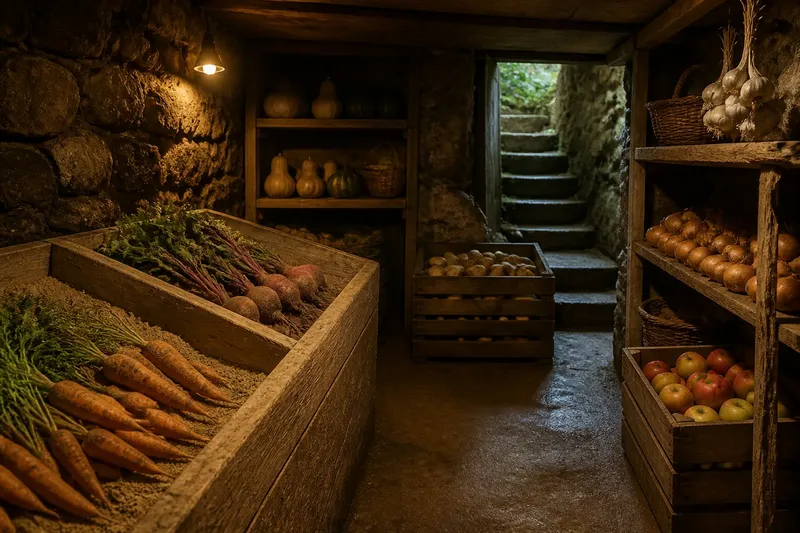
Food could also be kept in the coolest practical part of a dwelling, away from sun and cooking heat. Such places offered a useful pause, not the steady cold of an icebox. They did not make every perishable ingredient suitable for prolonged storage.
2. What did an icebox actually change?
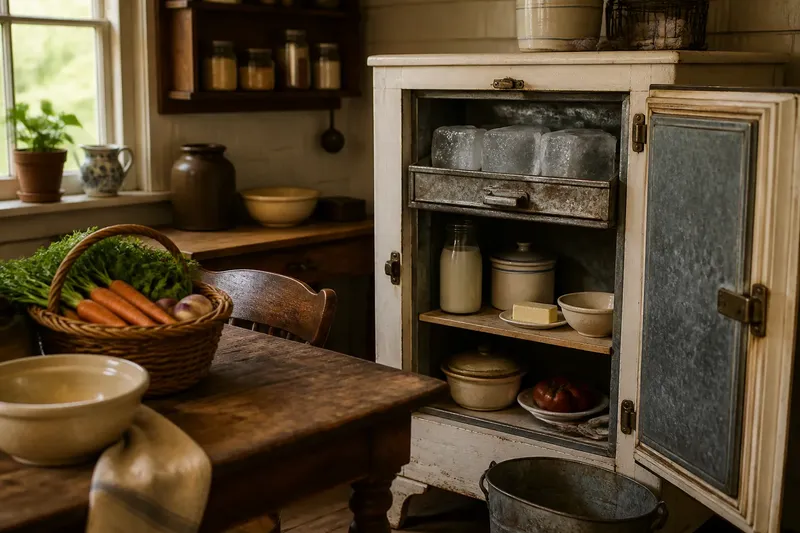
An icebox brought an insulated cabinet into the kitchen or another convenient part of the home. A block of ice sat in a compartment, and the cabinet’s design allowed cold air to cool the space used for food. Meltwater had to be dealt with, and fresh ice had to arrive as the block diminished.
This arrangement made cold storage more accessible between shopping trips. Leftovers, milk, butter and other perishable foods could be gathered in one household place rather than managed only through quick use and cool corners. The change was practical, but it also created a new task: maintaining the ice supply and attending to the cabinet.
The icebox was not an electric refrigerator under another name. It relied on delivered ice, insulation and regular household attention. Its usefulness depended on local ice supply, the cabinet’s condition and the household’s ability to manage its upkeep.
3. Why did the icebox change shopping and cooking?
When a household could keep some food cold, the interval between shopping trips could stretch. A cook might buy milk and other perishables together, hold a portion for a later meal, or keep leftovers for another use. Menus could become less tightly bound to the day’s purchases.
That flexibility did not make meal planning disappear. It changed the decisions involved: which foods belonged in the cold cabinet, what should be used soon, and when to replenish ice. The icebox made storage more visible as a daily household practice, rather than leaving it mainly to market timing and immediate consumption.
Imagine a household that usually buys milk for that day’s meals. After acquiring an icebox, it could keep a second container cold for breakfast the next morning, while still buying fresh vegetables as needed. The observable change is a more flexible meal schedule, not an unlimited supply or permission to keep food indefinitely.
4. Who could use an icebox, and what did it demand?
An icebox required more than a cabinet. A household needed access to ice, a way to bring it home or receive delivery, and somewhere to manage the meltwater. The cost and effort of those arrangements meant that adoption varied with income, location and the services available nearby.
In places with reliable ice delivery, the cabinet could fit into an existing routine. Elsewhere, obtaining ice might be difficult enough to limit its usefulness. A kitchen’s space mattered too: the appliance had to sit where it was convenient without making everyday work harder.
Care was part of the bargain. The household had to keep the cabinet clean, handle melting ice and consider how food was arranged inside. The appliance offered a new kind of storage, but it did not remove domestic labour; it redirected some of it.
5. What does the icebox tell us about food history?
The icebox marks a shift from keeping food fresh mainly through timing and place towards managing a dedicated cold-storage space at home. It helped make leftovers and advance shopping more ordinary possibilities, while connecting kitchen routines to an outside supply of ice.
It also shows why household technologies rarely replace older practices in a single stroke. People continued to buy food, cook promptly and use familiar storage habits. The cabinet added another option, with its own limits, costs and chores.
For anyone tracing the history of the icebox, the most revealing question is not simply when a household acquired one. Notice what changed in the daily rhythm: how often people shopped, where they kept perishables and who took responsibility for the cold cabinet. Those choices show how a new appliance became part of ordinary domestic life.
What do readers ask about the icebox?
Was an icebox the same as a refrigerator?
No. An icebox used a block of ice to cool an insulated cabinet, while an electric refrigerator produced cold through a powered system. The two appliances served a related purpose but relied on different supplies and household routines.
Where did the ice for an icebox come from?
Households might obtain ice through local delivery or other sellers, depending on where they lived and what services were available. A dependable supply mattered because the cabinet needed replacement ice as its block melted.
Did every household have an icebox?
No. Access depended on factors such as household means, available space and the local supply of ice. In some homes, frequent shopping and familiar ways of keeping food remained more practical.
What foods did people keep in an icebox?
It was used for perishable foods that households wanted to keep cold between meals or shopping trips, such as milk, butter and leftovers. The exact use depended on the cabinet, its ice supply and the household’s needs.
The icebox’s lasting lesson is that convenience has a household shape: it changes who does the work and when. Look at an old kitchen account, family recipe or household inventory, and the clues are often practical ones—milk bought for another day, a place set aside for ice, or a chore added to the daily round.